

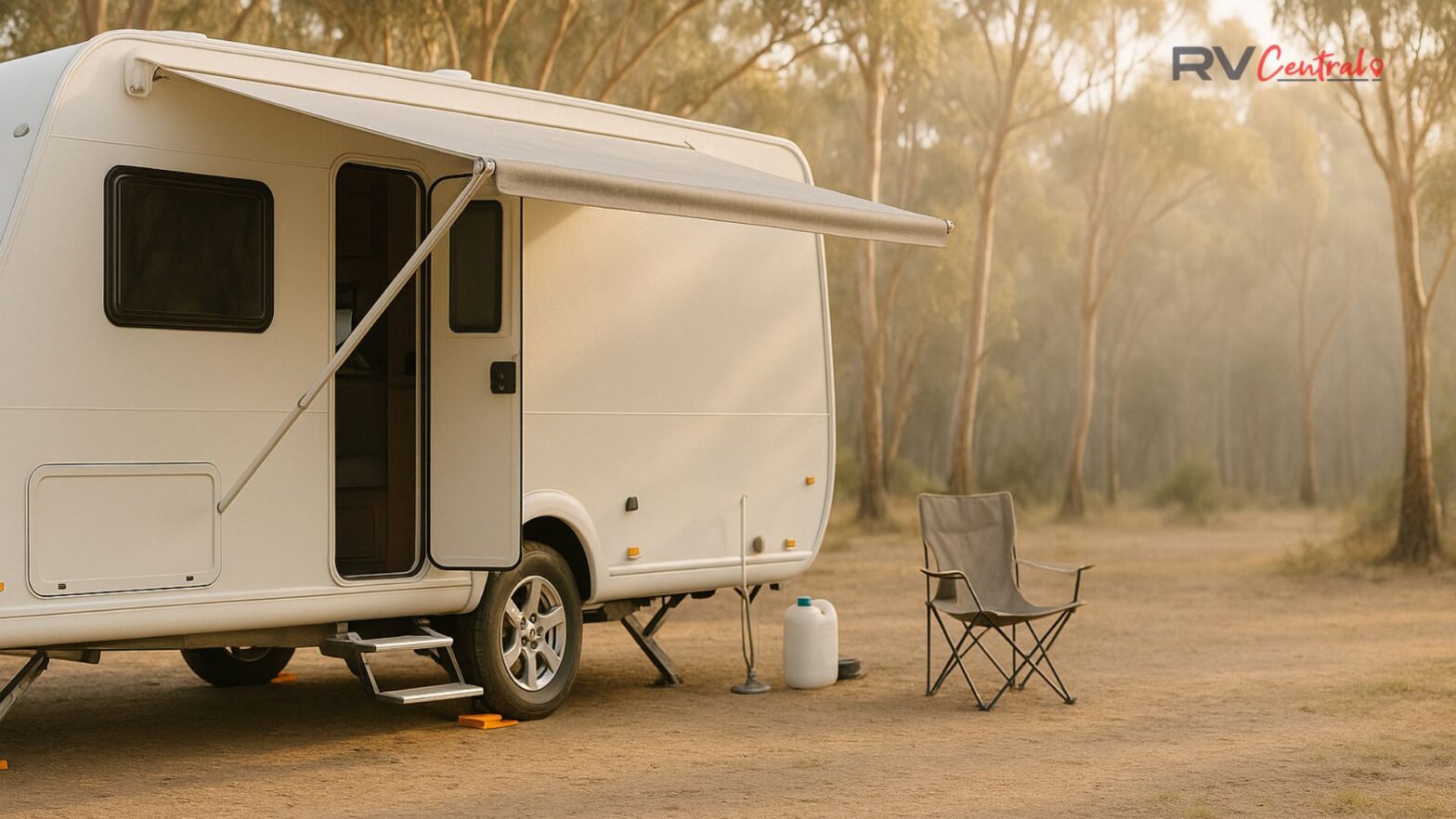
Spring is a fantastic time for caravan adventures. The weather begins to warm, wildflowers bloom, and daytime hours stretch. But spring can also surprise you — cold nights, sudden showers, muddy tracks, and chilly winds are all part of the season. That makes packing smartly essential. Here’s RV Central’s go-to guide for what to bring when caravan camping in spring — whether you’re heading for a coastal escape or a bushland getaway.
1. Clothing & Footwear: Layer Up
Spring weather often shifts hour by hour. Your clothing choices should let you adapt.
- Start with base layers (e.g. lightweight merino or moisture-wicking synthetics).
- Add mid layers such as fleeces, light jumpers, or insulated vests.
- Include a waterproof, windproof outer shell (jacket + pants) for showers or wind.
- Pack extra socks, ideally wool or synthetic — damp, cold feet can ruin a trip.
- Bring a wide-brim hat, sunglasses, and gloves for mornings or evenings.
- Footwear should include sturdy walking shoes or boots, and something lightweight/comfortable for campsite wear (e.g. sandals or camp shoes).
- Even though it’s spring, include a few warm layers (thermal top, beanie) for colder nights.
2. Bedding & Sleep Gear
Spring nights can be chilly — don’t underestimate them.
- A good sleeping bag rated for cool conditions (aim for a comfort rating down to 0–5 °C, depending on your location).
- Extra blankets or a duvet for layering.
- Use sleeping mats or mattress toppers to reduce heat loss to the caravan floor.
- Pillows, pillowcases, and spare linens (one spare fitted sheet can go a long way).
- For caravans, ensure your mattress, bedding, and covers are properly sized and comfortable.
3. Kitchen, Cooking & Food
One of the joys of caravan camping is eating outdoors and cooking for yourself.
- Portable stove or cooktop, and backup fuel / gas bottle.
- A basic cookware set: saucepan, frying pan, kettle.
- Utensils: spatula, spoon, tongs, knife, cutting board.
- Reusable containers for food storage, plus airtight jars for dry goods (rice, pasta, spices).
- Dishwashing supplies: biodegradable soap, scourers, dish cloths, trash bags.
- Cooler / fridge and ice packs.
- Basic pantry staples: oil, salt, pepper, sugar, tea, coffee.
- Salt, herbs, and spices to liven up meals.
- Matches or a lighter, and a fire-starting kit if campfires are permitted.
- Extra kitchen tools like a can opener, bottle opener, recipe book, chopping board.
4. Caravan Essentials & Setup Gear
This category is what separates caravan camping from tent camping.
- Levelling blocks / ramps to ensure your van or caravan is stable and level.
- Stabiliser jacks, wheel chocks, and jack for safe and secure setup.
- All relevant power leads, extension cords, and adaptors.
- Water hose / fittings / water filter and extra jerry cans for water supply.
- Waste / grey water hoses / sewer kit if your unit supports it.
- Awning or shade cover, plus tie-down ropes, pegs, poles.
- Spare parts (fuses, bulbs, hose fittings, clips), duct tape, multi-purpose toolkit.
- Security items: hitch lock, wheel lock, door locks.
- Safety equipment: fire extinguisher, smoke alarms, carbon monoxide detector (if fitted), first aid kit.
- Caravan / vehicle documentation, registration, permits, roadside assistance info.
5. Electrical, Communication & Navigation
In spring, you may swing between powered parks and more remote camps.
- Battery / deep cycle battery and solar panels or portable solar kit (if you plan to boondock).
- Battery charger / inverter and sufficient cabling.
- LED lighting, headlamps, portable lamps.
- Phone / tablet / laptop charging gear plus backup batteries or power banks.
- GPS / navigation device / maps, preferably with offline capability.
- Communication devices (UHF radio, satellite phone, or an EPIRB, depending on the remoteness of your route).
- Spare cables, extension cords, connectors.
6. Recovery & Off-Road / Emergency Gear
If your route includes unsealed roads or more rugged terrain, this gear is critical.
- Recovery gear: snatch straps, D-shackles, recovery tracks.
- Shovel, axe, gloves.
- Tyre repair kit, spare tyre, tyre pressure gauge, jack.
- Jumper leads, extra engine oil, coolant, spare fluids.
- Torch, spare batteries, headlamp.
- Emergency signalling device (flare, whistle, mirror).
- Safety kit: mosquito repellent, insect spray, sunscreen, basic meds, dressings, insect bite treatment.
7. Toiletries, Health & Personal Items
Don’t neglect your personal essentials.
- Toiletries: toothbrush, toothpaste, shampoo, soap (biodegradable where possible), wet wipes.
- Toilet paper (bring more than you expect).
- Towels (compact / quick-dry).
- Insect repellent, sunscreen, lip balm.
- Personal medications and a small medical kit (plasters, antiseptic, any personal prescriptions).
- Hand sanitiser.
- Any baby supplies, feminine hygiene, etc.
- Optional: binoculars, camera, journal, books, games.
8. Outdoor Comfort & Camp Accessories
You’re not just camping inside your caravan — make the outdoors comfortable too.
- Folding chairs, camping table.
- Outdoor rug or mat to reduce dust inside.
- Portable awning side walls or shade screens.
- Clothesline, pegs.
- Lighting: solar lights, fairy lights, lanterns.
- Mosquito coils or citronella candles.
- Extra tarps or ground sheets.
- Umbrella, picnic blanket.
9. Important Documents & Pre-Trip Checks
Before you hit the road, have these sorted.
- Caravan and towing vehicle registration, proof of insurance.
- Driver’s licence, permits, park passes, road permits.
- Owner’s manuals, caravan inspection report.
- Printouts or screenshots of your itinerary, campsite bookings, maps.
- Emergency contact list.
- Check your caravan systems: test lights, plumbing, gas, fridge, stove, water pump.
- Service the towing vehicle, check tyre pressure, check belts, fluids, and electrics.
- Secure all items inside the van so nothing moves while driving.
- Check the weather forecast, fire bans, and road closures along your route.
10. Bonus — If You’re in the Market: Small Camping Trailers, Caravan Dealers & Buying Tips
If you don’t yet own a caravan or are considering upgrading, spring is a great season to explore options. Many caravan dealers showcase models and may offer specials at this time.
- Look into small camping trailers for sale or compact caravans — they are easier to tow, more fuel-efficient, and fit more camping locations.
- Seek out the best caravan dealers in your region for a wide selection, service support, parts, and after-sales warranty.
- Check that dealers offer inspection, service history, and support for accessories and parts.
- When comparing, consider interior layout, weight, off-road capability, storage capacity, and ease of setup.
Final Thoughts
Packing well for caravan camping in spring is about balance: bring enough to stay comfortable and safe, but avoid overloading your van. Focus on layering, shelter, reliable gear, and redundancy for essential systems. And if you’re in the market for a caravan or trailer, work closely with reputable caravan dealers when exploring small camping trailers for sale or larger models.
At RV Central, every adventure starts with preparation. Use this guide as your base, adapt it for your route and style, and enjoy a relaxed, comfortable, and unforgettable spring camping journey.


