

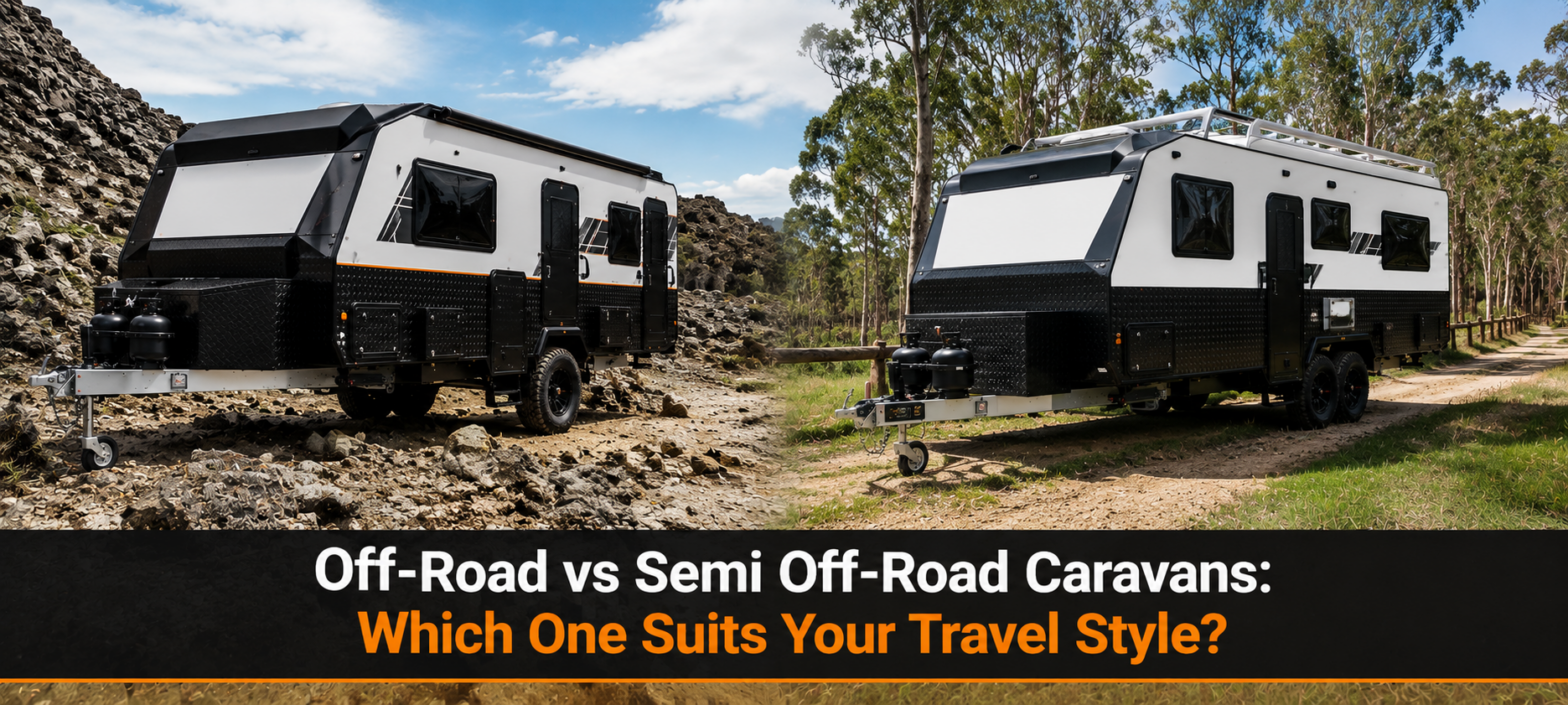
Briefly explain that off-road and semi-off-road caravans are often confused, but they are built for different travel conditions. Mention that choosing the right type depends on where the buyer plans to travel, how often they go off-road, towing needs, comfort expectations, and budget.
What Is An Off-Road Caravan?
Explain that an off-road caravan is designed for tougher Australian conditions, including corrugated roads, rocky tracks, remote campsites, uneven surfaces, and long-distance touring. Cover key features such as a stronger chassis, higher ground clearance, independent suspension, off-road tyres, reinforced construction, better underbody protection, and greater self-sufficiency features.
What Is A Semi Off-Road Caravan?
Explain that a semi off-road caravan is suitable for lighter adventure travel, such as gravel roads, national park access roads, maintained dirt roads, and basic campsites. Make it clear that semi off-road models are not usually built for extreme terrain or long stretches of rough corrugations. Mention that buyers can compare options through experienced caravan dealers to better understand build differences.
Key Differences Between Off-Road and Semi Off-Road Caravans
Break down the main comparison points:
Chassis Strength
Off-road caravans usually have heavier-duty chassis construction, while semi off-road caravans may have a lighter frame suited to moderate travel.
Suspension
Off-road caravans generally include stronger suspension systems designed to absorb repeated impact. Semi off-road suspension is better suited to occasional uneven roads.
Ground Clearance
Off-road caravans sit higher to reduce the risk of scraping underneath. Semi off-road models may have moderate clearance but are less suited to ruts, rocks, and steep tracks.
Tyres And Protection
Off-road models often include all-terrain tyres, stronger wheels, stone protection, and underbody protection. Semi off-road caravans may include some protective upgrades, but usually not to the same level.
Where Can Each Caravan Type Go?
Explain that semi off-road caravans are ideal for highway touring with occasional gravel roads, coastal trips, caravan parks, and accessible camping areas. Off-road caravans are better for remote camping, rough tracks, station stays, outback touring, and more adventurous routes. Include a practical note that buyers should be realistic about where they travel most often, not just where they imagine going one day.
Comfort, Weight and Towing Considerations
Discuss how off-road caravans can be heavier due to stronger construction and added features. This may require a suitable tow vehicle. Semi off-road caravans may be easier to tow and more practical for travellers who mainly stay on sealed roads. Mention layout, storage, water capacity, power systems, and payload as important factors.
Which Option Is Better For Families, Couples and First-Time Buyers?
Explain that families may need more durability, storage, bunks, and payload. Couples may focus more on comfort, compact layouts, and off-grid ability. First-time buyers may prefer semi off-road models if they are still learning their travel style. Briefly mention that some buyers also compare caravans with small camping trailers for sale when they want a lighter and simpler setup.
Cost Difference Between Off-Road and Semi Off-Road Caravans
Explain that off-road caravans generally cost more because of stronger components, engineering, suspension, protection, and off-grid features. Semi off-road caravans can be more affordable and still suitable for many Australian travel plans. Reinforce that the best value depends on actual use, not only the purchase price.
How To Choose The Right Caravan For Your Travel Style
Create a decision-style section covering questions such as:
Do you regularly travel on unsealed roads?
Do you want to visit remote campsites?
Is your tow vehicle suitable?
How much water, power, and storage do you need?
Will you travel as a couple or family?
Do you want comfort, adventure capability, or a balance of both?
Conclusion
Summarise that off-road caravans are built for serious adventure, rougher tracks, and greater durability, while semi off-road caravans are better suited to moderate travel, occasional gravel roads, and more accessible touring. End by encouraging readers to choose based on real travel plans, towing capacity, comfort needs, and the level of terrain they want to confidently handle.


