No matter how you travel, whether it be in a new Motorhome or exploring the wide range of Used RV campers available across Australia, storage is everything. Making the most of every nook and cranny in your new RV will make your adventure so much more enjoyable than rummaging through crates to find that elusive spatula. As well as organising the inside of your new van, having a streamlined and well-organised basement storage setup (Though storage) means more room for important stuff!
In the following guide, we’ll take a look at practical and sometimes creative ways to maximise RV basement storage helping you maximise space, stay organised, and spend more time enjoying Australia.
For most adventurers, hitting the road in an RV or motorhome represents the ultimate freedom with a minimalist trend. But anyone who’s spent more than a weekend on the road and in a camper knows one thing for sure: storage matters.
What Is Pass-Through Storage?
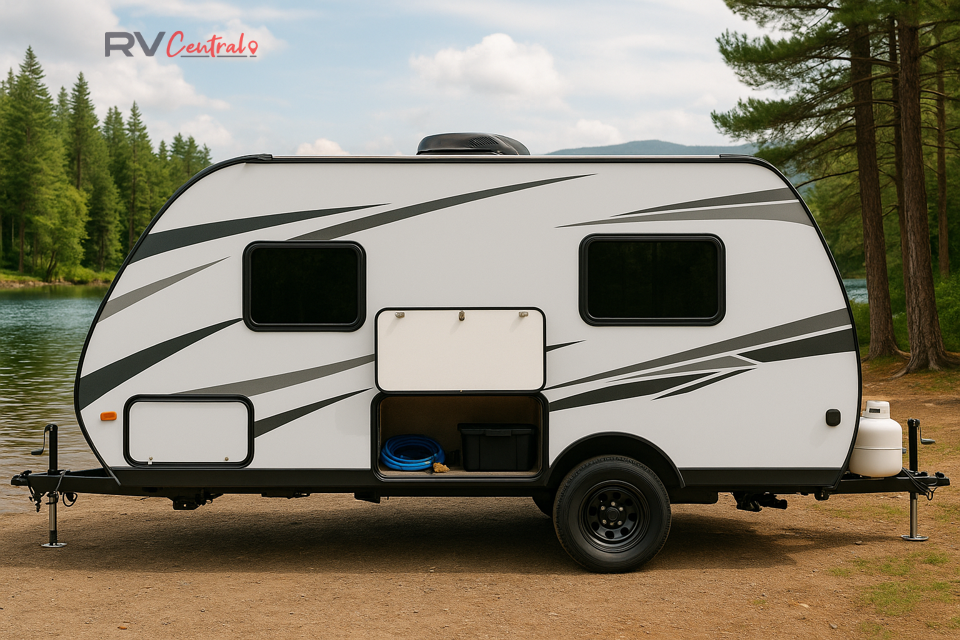
Pass-through storage is precisely how it sounds. It refers to the large compartment underneath your RV or motorhome that spans from one side of the vehicle to the other, providing access from both sides. Often referred to as the “basement,” this area is ideal for storing bulky items, such as camping gear, tools, hoses, tables, and more.
When you buy an RV Camper – especially a compact one – this space, as well as your internal space, may be limited, hence why you need to make use of every centimetre of space. This is essential when you buy RV Campers or prepare your rig for the next big trip.
1. Use Clear Storage Bins for Quick Visibility
Quick, easy and cheap. You can pick up clear storage containers with lockable lids at any cheap shop, Bunnings or Kmart. These help you stay organised and you can see what’s inside at a glance, saving time and frustration on the road.
Label according to use:
- Outdoor Cooking
- Tools & Repairs
- Water and Waste Supplies
- Pet Accessories
By grouping by use, you can add in everything you’ll need for that particular job, helping you find it all easily.
2. Install Sliding Storage Trays
If your RV doesn’t already have one of these, you should look at them. These storage trays extend outward, meaning you have full access to your gear without needing to crawl in or pull stuff out to get to it. Consider installing a sliding cargo tray in the pass-through area if you’d like the ultimate ease-of-use solution.
Sliding trays are a fantastic upgrade, especially if you’re looking to modernise Used RV campers or convert them for extended touring.
Som benefits include:
- Saving your knees and your back
- Easier packing and unpacking and sorting
- Faster campsite setup
3. Use Vertical Space With Hooks and Pegboards
Although these spaces are a little vertically challenged, the floor isn’t your only option – they still have walls and ceilings that can be utilised. Vertical storage is something many overlook, but it can be super helpful to use all available space.
Consider:
- Hooks on the roof for hoses and cords
- Pegboards on the walls for tools and kitchen gear
- Wire baskets for smaller or flat items like mats
This approach is ideal for both new and Used RV campers where every bit of storage counts.
4. Adding Lighting and Clear Labels
Remembering that you’ll probably need to access this at night at some stage, you may want to think about how you see in the dark. Yes, you could carry a torch, but what if you need your hands free? If your pass-through compartment is dark or difficult to navigate, a few battery-powered or USB-charged LED lights can transform it. Also, make sure your labels are durable and waterproof. Don’t forget any; add labels to all bins and compartments to further streamline your setup.
Bonus tip: Use colour-coded labels for categories like safety, cooking, and cleaning.
5. Prioritise Essentials With Easy Access
Organisation isn’t just about the packing and labelling – it’s also about placing frequently used items where they’re easy to reach.
Consider storing things like Levelling ramps, Power cables, Water hoses and camp chairs on the sides and maybe storing things that are used infrequently like backup supplies, repair kits and seasonal items that are not needed a little more toward the middle.
If you’re planning to buy new motorhomes, look for models with adjustable shelving or dual access doors to make this even easier.
6. What about Awkward or oddly shaped Items
Not everything fits nicely into a bin or container. Items like collapsible chairs or bulky blankets are better suited to canvas or duffel bags that can be squished into tight corners.
This approach is beneficial for Used RV campers that may not come with custom storage compartments or rigid internal systems. It means you can utilise that small space in the corner that seems to be unused.
7. Packing for Emergencies
You’ll need to allocate space for an emergency gear section. These should be stored in a labelled, waterproof container that’s easy to access, especially on long-distance trips through remote parts of Australia. Some examples of emergency supplies you should carry are:
- First-aid kits
- Jumper leads
- Flares or triangles
- Fire extinguisher
- Tyre repair supplies
And any spares you may need internally, like light bulbs, fuses, hose connections etc.
8. Rotate Gear Seasonally
If you’re not full-timing in your RV, a seasonal gear rotation can make a big difference. There’s no need to lug around beach umbrellas in winter or keep thermal blankets onboard in the summer heat.
By only packing what you need for that particular trip, you’ll save space and frustration on the road.
9. Install Motorhome-Specific Storage Systems
Many accessory companies now offer RV-specific storage systems. These products are designed with the motorhome life in mind and come with some additional features like anti-slip bottoms, lockable everything and multiple pockets in one item. Some that you could consider are Hanging organisers, Tool rolls, Velcro pouches and Stackable container sets
These products are particularly useful when you buy RV Campers that don’t come with factory-fitted storage enhancements.
10. Regular Reviews & Maintenance
Even the best storage system needs upkeep. Every few months:
- Reassess what you’re carrying
- Discard unused or broken gear
- Reorganise based on upcoming trips
Tip – Take a roll of sticky dots and add one every time you use an item. When you get home from a few trips, anything with no sticky dot is removed. You didn’t need it! Not only will this help maintain your setup, but it can also reduce weight, which affects both fuel efficiency in used RV campers and larger motorhomes alike.
Final Thoughts
Whether you’re travelling in a compact campervan or browsing the latest options to buy new motorhomes, your RV basement storage can make a big difference in how you travel. A well-organised pass-through compartment means less time hunting for gear and more time soaking in the beauty of Australia.
Take the time to optimise your setup now and future you – cruising down the highway or setting up camp under the stars – will thank you.
Ready to hit the road?
If you’re looking to upgrade or just getting started, browse a wide range of used RV campers and buy RV Campers or buy new motorhomes that offer the space, features, and basement storage you need to enjoy Australia the right way.